Cancel Culture

Before we discuss Cancel Culture, we should first define what it is. In a way, each of us cancels people in their day to day life. If someone has a personality we find offensive, we spend less time with them than those whose personalities we find agreeable. If a friend tends to disagree with us on politics, we may consciously avoid discussing these issues. As the saying goes, don’t talk about politics at the Christmas table. We tend to be drawn to things that confirm our world view. While those identified as advocates of cancel culture are often accused of living in an “echo chamber” where only their views can be heard, the truth is that many humans live in a chamber like this. The purpose of this blog is not to defend this behavior, but to show how it can lead to larger cultural issues such as cancel culture.
In class, we discussed the idea of an outrage culture that encourages people to react emotionally to people expressing opinions they dislike. In the world of public relations, if enough people express their negative opinions, it is possible to force a reaction from those responsible for the person’s livelihood. This can lead to the person getting deplatformed or fired or in the most extreme cancel cultures, such as countries that do not have free speech, being punished by the government.
The difference between politics you disagree with and having them canceled is the difference between hiding from the world’s problems and trying to hide problems from the world. When you cancel certain viewpoints out of your own life, the one who primarily suffers is you, for losing the opportunity to be informed. When someone is canceled, everyone suffers: The canceled person suffers for being unable to share their opinions, the cancelers suffer for giving up a chance to engage in constructive conversations, and others suffer for receiving a more one-sided discourse. From a more pragmatic perspective, canceling someone can sometimes lead to their views becoming more widespread.
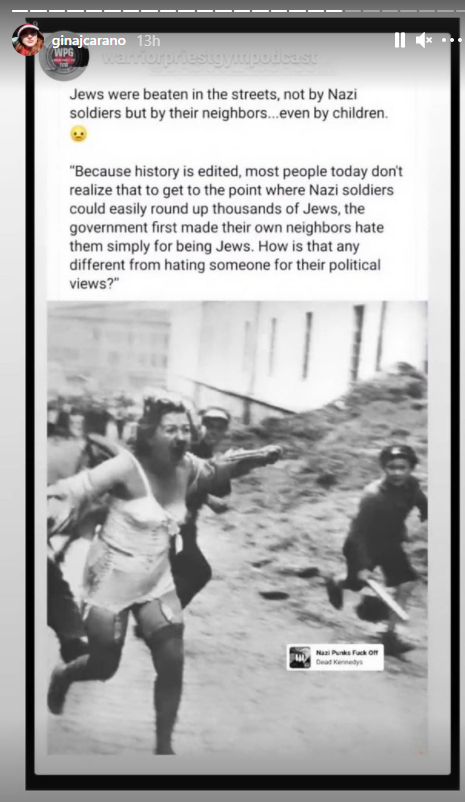
Actress Gina Carano was fired from Disney following a controversial post comparing hatred of a person with differing opinions to the anti-semitic persecution that led to the Holocaust. Many interpreted this post as Carano claiming American conservatives were being persecuted, leading to calls of #FireGinaCarano on Twitter. The post itself made no explicit references to conservatives or republicans. Carano’s firing became the focus of several conservative commentators including Ben Shapiro, whose media company hired Carano. Before this incident happened, my family and I neither knew nor cared what Carano’s political views were. After the incident, her name came up whenever we discussed renewing Disney+.
There is a social phenomenon known as the Streisand effect, where the attempt to suppress information causes it to spread. In a way, Carano’s firing was an example of this phenomena, increasing her notoriety and spreading knowledge of her post to people that barely knew what her politics were. Whether a fair interpretation or not, many conservatives saw this as an example of Hollywood prejudice against Conservatives, the very message Carano’s critics claimed she was promoting.
I have often found myself forced to listen to ideas that disgusted me. In such cases, I believe there are two possibilities: Either the speaker is right, or they are wrong. If they are right, then my disgust is ill-founded and by listening to them I get the opportunity to come closer to the truth. If they are wrong, then I will benefit from listening to and understanding bad ideas so that I can use my own reasoning to counter them more effectively. Cancel culture is neither pragmatic nor idealistic.

.jpeg)

Comments
Post a Comment